
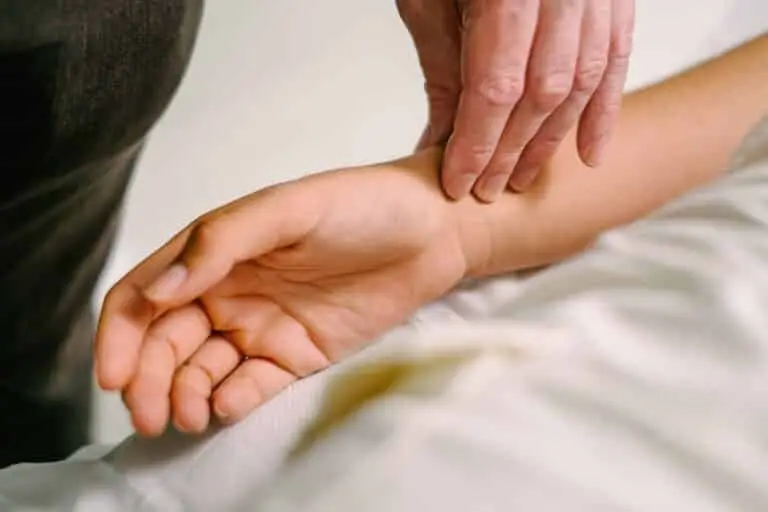
When you see me, your first consultation will involve questions about your health history, lifestyle and what you would like to gain from treatment. This means the treatment is tailored to you. Feeling the pulses on the wrists (there are three points on each side along the radial artery that can tell us a lot about your health) and looking at the tongue is part of the diagnostic process. An acupuncture treatment does not necessarily just involve acupuncture – as per tradition, treatments often incorporate other Chinese Medicine techniques – I decide which I will use depending on many different factors, with the aim of regaining balance. The one thing I do not do is herbal medicine, but I can refer patients to herbalists where I think necessary.
During a course of treatments, your progress is monitored and treatments are adjusted depending on how you are doing at that point in time. People often start with at least a few regular treatments, as they have a cumulative effect, and if the issue is chronic, it can take longer to treat. Treatments are then spaced out once progress is made. Homecare advice is another important aspect of the session, as we recognize the connection between lifestyle and health, and we aim to empower the patient to help themselves. This could entail dietary or exercise advice, work/life balance tips, methods to help reduce stress, etc.
Techniques include:
Fine, single use, sterile needles are inserted in specific points of the body to stimulate the healing response. There are hundreds of acupuncture points in the body, many of which are found along the Channels (another name is Meridian lines).
Needles might be inserted briefly for a few seconds, or up to half an hour, depending on the required outcome. You may experience a variety of sensations depending on the point stimulated and the needling technique used – the name for this is ‘Deqi’, which is thought to be the feeling of Qi coming to meet the needle.
I can include some massage / tui na techniques (please see Tui na and Massage Treatments for more information).
Gua sha involves rubbing an area of skin with a tool, after the application of massage oil, in order to stimulate circulation and work out ‘pathogenic factors’ from the body. It is another type of therapy that has been practised for hundreds of years in China, but has recently caught on in the West.
Cupping involves placing cups on the skin to create a suction, stimulating circulation and working out waste products/toxins or ‘stagnation’ and ‘pathogenic factors’ from the body, according to Chinese Medicine. Traditional glass cups gain suction from the quick insertion and removal of a flame before being placed on the body (after application of massage oil), so it can have a pleasant warm sensation. Other types of cups are made of plastic or silicon. Depending on the diagnosis, cups are left in place for up to 20 minutes, or moved around the skin for a few minutes.
Cupping is another Chinese Medicine technique that has been adopted by the West – from a musculoskeletal viewpoint, it can help to ‘unstick’ tense fibres and ease tension, encouraging the flow of blood and nutrients to an area.
Moxa is a dried form of the artemesia vulgaris latiflora herb that is burned and used in different forms, such as a compressed stick hovered over acupuncture points or Channels, or small pyramid shapes placed on points, to introduce heat and to stimulate the movement of ‘Qi’. The Chinese believe it can help clear various forms of stagnant Qi and boost our body’s natural defences. Moxibustion is another fundamental component of Chinese Medicine practice. It feels warm and soothing – scientific studies show its heat is infrared, which penetrates the body well, and studies also indicate it can boost the immune system.
The Chinese classical texts recognized the importance of ‘Yangshen’, or ‘nourishing life’. The Yellows Emperor’s Classic of Internal Medicine emphasized cultivating health in order to prevent sickness. Hence treatments involve homecare advice and encouraging you to empower yourself by taking action to assist your progress. This could be dietary or physical exercise advice, or could cover other areas.
Your initial consultation covers your health history, lifestyle and what you’d like to achieve from treatment. Catherine will also feel the pulses on your wrists and look at your tongue as part of the diagnostic process. This thorough intake means your treatment is tailored to you from the very first session.
These are traditional Chinese Medicine diagnostic tools. There are three pulse points on each wrist along the radial artery, each of which can reveal information about different aspects of your health. The tongue’s colour, coating and shape also provide useful diagnostic information. Together they help build a picture of what’s happening internally.
Not necessarily. In keeping with traditional practice, a session may incorporate other Chinese Medicine techniques alongside acupuncture — such as cupping, gua sha or moxibustion — depending on what Catherine determines is most appropriate for you at that time. Catherine also practises electro acupuncture.
Acupuncture uses very fine, single-use sterile needles. You may feel a mild sensation when a needle is inserted — this is known as ‘Deqi’, and is thought to be the sensation of Qi coming to meet the needle. it could also be interpreted as the needle interacting with the fascia, or connective tissue, in modern thought. It is generally not painful and many people find sessions deeply relaxing.
This varies depending on the treatment. Needles may be inserted briefly for a few seconds, or left in place for five minutes, or 15-20 minutes, depending on the points used and the outcome required.
Acupuncture has a cumulative effect, so most people begin with a course of regular treatments. If your condition is chronic or longstanding, it may take longer to see results. Once progress is made, appointments are typically spaced out. Catherine monitors your progress throughout and adjusts treatments accordingly.
Gua sha is a traditional Chinese therapy that involves rubbing an area of skin with a smooth tool after applying massage oil or vrious balms. It stimulates circulation, clears stagnation and is used to move what Chinese Medicine calls ‘pathogenic factors’ from the body. It has been practised in China for hundreds of years and is increasingly popular in other countries.
Cupping involves placing cups on the skin to create suction, which stimulates circulation and helps release tension and toxins according to Chinese Medicine. Traditional glass cups involve the brief insertion of a flame to create suction and often produce a pleasant warm sensation. Catherine also uses plastic and silicone cups. Cups may be left in place for up to 20 minutes or moved across the skin. From a musculoskeletal perspective, cupping can help release tight muscle and connective tissue fibres and improve blood flow to an area.
Moxibustion uses a dried herb called moxa (artemesia vulgaris latiflora), which is burned and applied near acupuncture points or Channels to introduce warmth and stimulate the movement of Qi. It feels warm and soothing. Scientific studies have found that moxa heat is infrared — which penetrates the body particularly well — and there is also research suggesting it can support the immune system.
No — Catherine does not practise herbal medicine. However, if she feels a patient would benefit from herbal treatment, she is happy to refer to an appropriate herbalist.
Homecare advice is an important part of every session. Chinese classical texts have long emphasised ‘Yangshen’ — the practice of nourishing life and cultivating health to prevent illness. Catherine may offer dietary guidance, exercise advice, stress management techniques or work/life balance suggestions, all aimed at empowering you to support your own progress between sessions.